CAEPIPE Analysis Features
CAEPIPE performs linear and non-linear static and dynamic analysis of 3D piping systems using proven, optimized solution algorithms.
See Video of Analysis Speed in Action
Watch Demo
Types of Loads
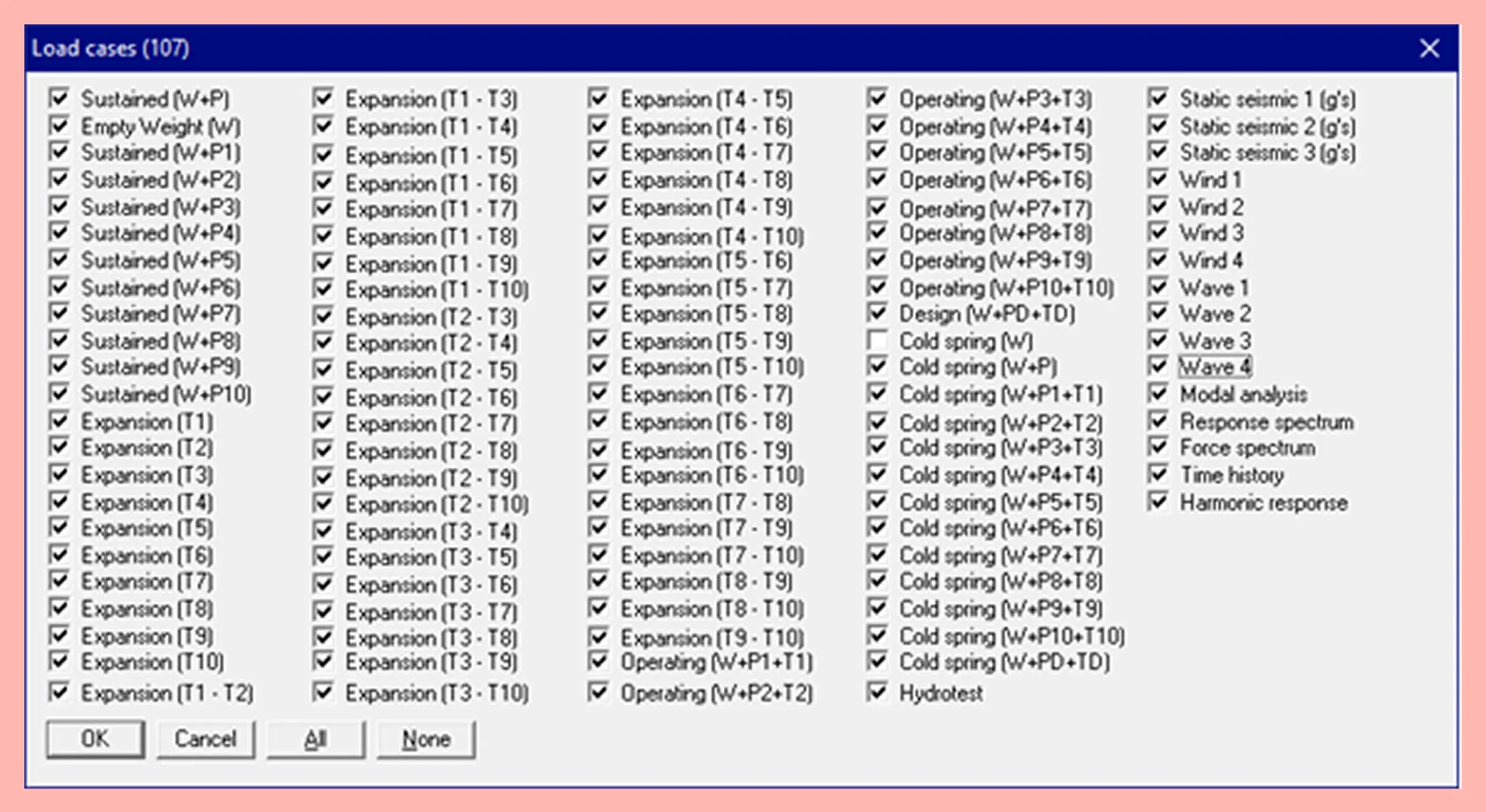
Weight and up to 10 pressures (i.e., up to 11 sustained cases)
External pressure(s) can also be input
External forces and moments for up to 10 thermal cases + 1 max sustained case + 3 seismic cases
Hydrotest case
Design Pressure
Up to 10 thermal loads with 50+ thermal range (expansion)
Design Temperature
Up to 11 thermal displacements for anchors, generic supports and nozzles (expansion and design)
Up to 10 operating cases (combination of weight, pressure and temperature)
Design case (combination of weight, pressure and temperature)
Flange equivalent pressures for 10 operating cases
Rotating equipment reports for 10 operating cases
Buoyancy and Marine growth (sustained)
Up to 4 wind loads (occasional cases)
Up to 4 wind specified displacements (occasional)
Up to 3 static seismic acceleration (g-load) (occasional)
Up to 3 seismic specified displacements (occasional)
Settlement load case
Force spectrum load (occasional)
Seismic response spectra (occasional) including specified displacements
Power Spectral Density (PSD) data for Random Vibration
Harmonic loads, e.g., periodic excitation from equipment such as pumps (occasional)
Time history loads, e.g., a fluid hammer (occasional)
Non-repeated anchor movement (settlement)
Peak pressure for occasional loads
100+ load combinations
Support Load Summary for 240+ load combinations
Linear and Nonlinear Analysis
Linear static analysis for sustained, thermal and operating load cases
Nonlinear static analysis for gaps, friction and support lift-off conditions
Automatic spring hanger design and iteration support
Code stress and displacement evaluation in a single workflow
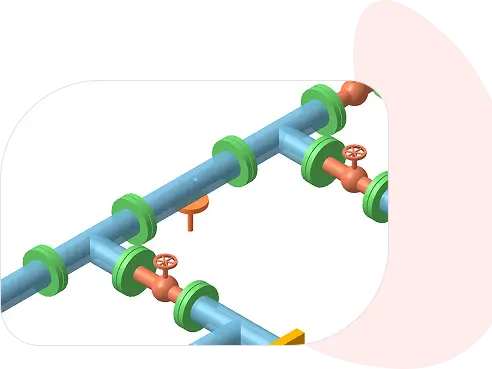
Extendable number of iterations for difficult nonlinear models
Quick what-if updates for support and routing changes
Efficient solution algorithms for large 3D piping systems
Integrated reports for restraint, force and moment review
Dynamic Analysis Methods
Seismic response spectrum analysis
Random vibration analysis using PSD data
Time history analysis for transient events such as fluid hammer
Harmonic analysis for periodic equipment excitation
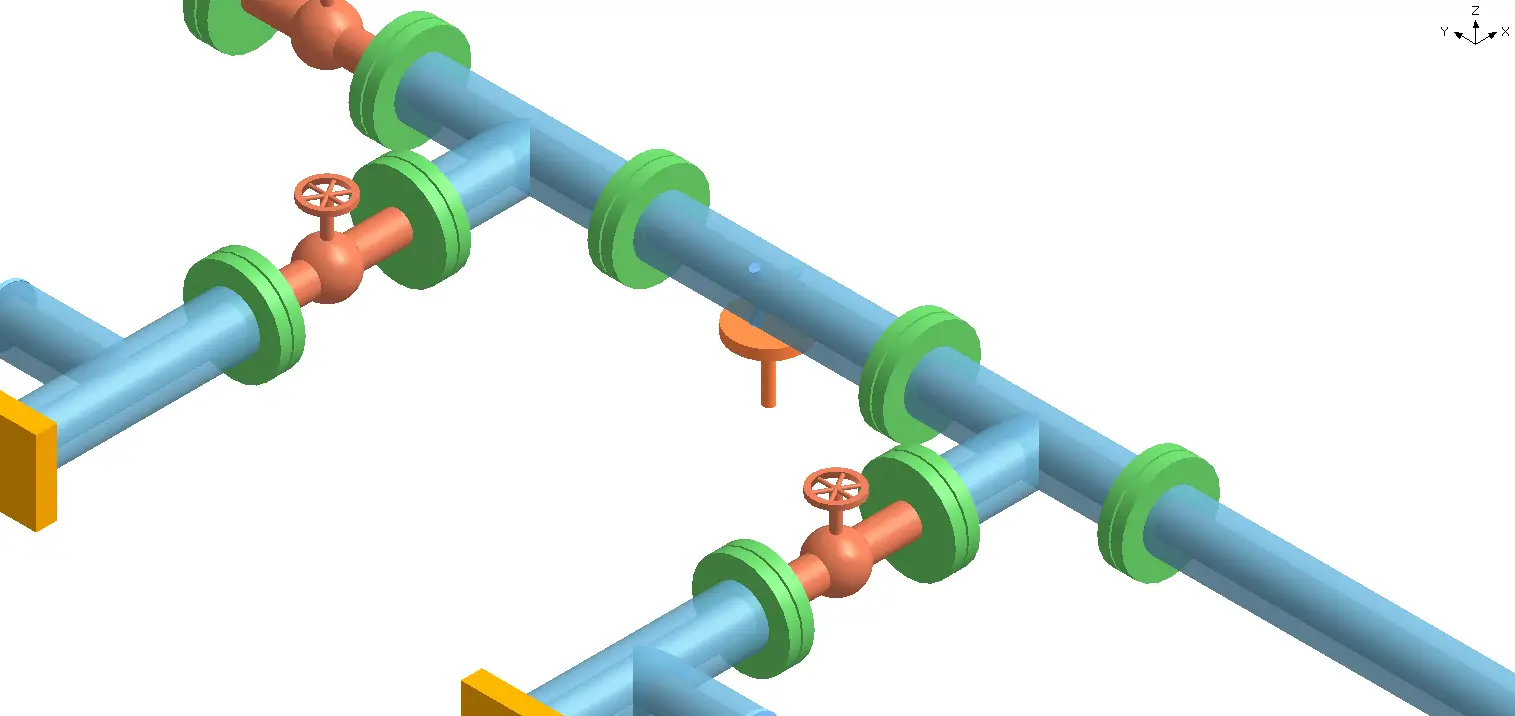
Evaluate occasional load combinations alongside sustained cases
Review deflected shapes, support loads and stresses together
Generate organized output for design checks and client review
Use proven CAEPIPE algorithms optimized for speed
Caepipe Fast Efficient Analysis
Optimized Algorithms - Extremely Fast Analysis
Linear & Nonlinear Static Analysis
Extendable # of iterations for nonconvergent models
Advanced Dynamic Analysis: Time History, Harmonic, etc.